Sunday, July 4, 2010

The Fake Anastasia


In 1920, a Polish woman living in Germany named Franziska Schanzkowska tried to kill herself. Franziska hadn't been doing to well for the last few years. Her boyfriend had died in World War I, she was injured in a factory accident where she worked, and she didn't have any money left. So she jumped into a canal hoping to end her life.

She ended up being saved and placed in a mental hospital. Franziska refused to talk about who she was or where she was from. She became known as "Miss Unknown". She stayed there for two years. Her roommate as the asylum became convinced she was a daughter of Nicholas II after seeing some resemblance between her and a photo of the royal family. At the time, though widely believed to be dead, no one was sure what had happened to the Romanovs. There were no bodies, and the Soviets were being very vague about what had been done. Nicholas's mother still thought they were all alive.

So Franziska's roommate, Clara, called on some outside friends who were involved with Russian nobility living in Berlin. They found a Russian Count who believed Clara's story. Clara was convinced Franziska was Tatiana, Nicholas's second daughter, but they soon found out she was too short, and settled on Anastasia. More monarchists came to visit her, and claimed to recognize her. At first, Franziska had little to say about any of it, but as time went on she went along with it until she was in over hr head.

As a child, Franziska had dreamed of fame and fortune and being an actress. That didn't work out for her and she felt she had no life to go back to. So she became Anastasia. Surprisingly, some people (but not most) who knew the real Anastasia claimed to recognize her. A man named Gleb Botkin, who's father was the Romanov family doctor, supported her claim.

She got out of the asylum and was taken in my various Russian monarchists who believed if her story was proven she would get an inheritance. No such inheritance existed; in fact Nicholas II's sister Olga ended up living in an apartment over a beauty salon in Canada at the end of her life. His sister-in-law Natasha died at a charity hospital.

Gleb Botkin, in my opinion, knew Franziska (or Anna Anderson as she was known after trip to America) wasn't Anastasia, but he wrote several books and articles on her and probably made a pretty penny off the story. It's also likely he and his sister Tatiana had coached Franziska about the life of the real Anastasia so she could impress people by remembering things "only Anastasia could know".

Long story short, she ended up living in a falling apart mansion in Charlottesville, Virginia and married a local eccentric in old age. They had lots of cats, and she died in her eighties with many people believing she was for real.

She was also crazy, but that actually helped her claim as royals are known for being totally nuts. Plus she was rude to everyone and treated her supporters as inferiors, which also seemed very regal. People who didn't have a reason to believe she was fake generally bought it because she was very believable as a Grand Duchess.

More information:

http://anna-anderson.webs.com/

Wallis, Part 7


Okay, I actually had something long written for part seven on Wallis Windsor, but I lost it. I also had a long Part Two on Mathilde which I cannot find right now, but think might be on my other computer, so I will look for that tomorrow night. I had written some stuff last weekend that I was unable to post and now I can't seem to find most of it.

So, I'm rewriting most of it.

When we left off, Wallis and David were on a boat headed for the Bahamas, where he had an appointment as Governor General. After a stop off in Bermuda, they arrive in Nassau on August 17, 1940.

Wallis was not happy. It was really hot, and this was before air conditioning. Wallis considered herself delicate when it came to hot temperatures. When they got into Government House, their residence during their tenure, they discovered it was not in good condition and had some bug problems. Wallis didn't feel it would do at all, and wanted the British government to fork over some money for renovations. Meanwhile, The Firm had sent over some tough regulations on how Wallis was to be treated and how she was not a member of the royal family. David was going to complain on her behalf, but Wallis talked him out of it and encouraged him to instead complain about how bad their accommodations were. Money was set aside for the repairs (not enough in Wallis's opinion) and the Windsors stayed in other people's houses while Government House was renovated.

Now, Wallis was very interested in Marie Antoinette (as well as Anne Boleyn, and other royal ladies who ended up getting decapitated) and in some ways during her first few months as Governor's wife she began to emulate her. Wallis insisted that a swanky celebrity hairstylist be flown in from New York to do her hair. She also tried to go to the U.S. as much as possible, and wanted David with her when she did. Once they went to her hometown of Baltimore, the place she'd dreamed of getting away from as a child, and people lined up for miles to greet her. Wallis constantly complained to her friends and family back home about their "exile" in the Bahamas, and compared it to Napoleon being exiled in St. Helena. She even found time to slip up to New York for a facelift, which were both dangerous and unattractive in that time period.

After Government House was renovated, the interior design and comfort level matched more with what Wallis had become used to. But there were still bugs. Wallis and David slept with a mosquito net over their bed, and Wallis regularly found roaches crawling around all over the place. She'd never lived in a tropical climate before and found that she really didn't like it.

By the time they got there, they already had some enemies. The local Anglican Church sent out a press release to let the Windsors know that Jesus doesn't actually love everyone and thus they were not allowed to join the church. Eternally damned sinners, and all. Within their first few days they also managed to pick a fight with a major local newspaper editor and a few monarchist businessmen.

In 1940, the Bahamas had a population of about seventy thousand people, most of them Black or mixed race. Despite popular belief, the Windsors were not that racist. You know, for rich White people living in the 1940's. But, of course, by twenty-first century standards, they would be considered very racist. But, again, we're talking about rich White people in the 1940's. Being that this was part of the "British Empire" and the whole situation reeked of colonialism, the White population of the Bahamas basically ruled over the Black population. Obnoxious rich guy, Sir Harry Oakes, commented on their arrival:

"He will learn that the best way to govern the Bahamas is not to govern the Bahamas at all. If he sticks to golf he will be a good Governor and they'll put up statues to him. But if he tries to carry out reforms or make and serious decisions or help the (insert plural racial slur here) he will just stir up trouble and make himself unpopular."

David, always the multitasker, managed to both play golf and make himself unpopular. At the time Nassau was controlled by the "Bay Street Boys", a group of White business men who were like the colonialist mafia. They held significant political power and basically did everything they could to keep the non-White population down and make themselves rich. David, who for the first time in his life had actual political power, thought that the "Bay Street Boys" weren't particularly nice and set about trying to take away their political power. He fired them from his executive council, and dissolved the House of Assembly (the Bahamas legislature) and ordered new elections in the hopes of getting some different people in. That's one of the disturbing things about British colonialism. The British royal family wants to send away their black sheep so they don't have to deal with him and he ends up in an Executive position where he has significant power over thousands of innocent people. If he had been the mentally unstable Nazi fanboy he's often accused of being, he could have really done some damage.

Wallis, meanwhile, remembered that things hadn't worked out all that well for Marie Antoinette. She also realized that there were people living in the Bahamas who actually had it worse than she did. Wallis was automatically head of the Red Cross as the Governor's wife, and she set to work at hospitals helping tend to the sick. While there she met a nurse who worked was trying to start a clinic to help malnourished children. Wallis gave her a large donation and fundraised from all of her rich friends on her next trip to America. She also opened the first STD clinic in the Bahamas, addressing the kind of unpopular cause that Buckingham Palace usually ignores. When the infant welfare clinic opened, Wallis worked there every Wednesday, bathing, feeding, and changing sick babies. She genuinely went far beyond what was expected of her while the press continued to focus on her Marie-Antoinette-like demands. Though The Firm usually sends out a camera crew every time a princess shakes hands with an orphan, Wallis's charity work received little to no coverage.

When America entered the war in December, 1941, the Bahamas lost their biggest source of income; American tourists. But Wallis wrote to her Aunt Bessie, "I am glad we are going to be in the war which is better than being outside." The economy did suffer, and their was widespread starvation and poverty beyond what there had been before. But in May, 1942, they got a contract with the U.S. government to build an air force base, which created thousands of jobs and stimulated the economy. Beyond her other charity work, Wallis became involved with the canteen for soldiers and helped out by cooking and cleaning. Many men stationed there wrote home about being served a boiled egg by the Duchess of Windsor.

In August, 1942, David's brother Prince George died in a plane crash serving his country. George had been his favorite brother and they had lived together for several years before George got married. They had fallen out after David and Wallis got married and had not seen each other for nearly five years when George died; the last words between then had been angry. David fell into a very deep depression because of his brother's death, and Wallis tried in vain to cheer him up. It was the only time during their years together she felt at a loss to console him. He was forced to snap out of it by impending duties and obligations. It took him several months to get back to normal. George's death was one of the few things that forced the royal family to see the reality of war.

Earlier that year, Wallis had written to Queen Mary about how awful she felt about being "the cause of any separation that exists between mother and son" and suggesting Mary contact one of their friends who would be in London to hear what David was up to. The letter was basically an attempt to guilt Queen Mary into not hating her as much. It actually worked to some extent; Mary obviously didn't write back, but in her next letter to David she told him she "sent a kind message to your wife" and her judgement of Wallis seemed to have moved from "evil adventuress" to just "adventuress".

To help the war effort, Wallis published a cookbook to raise money for British soldier. Eleanor Roosevelt, who had published a similar cookbook, wrote the forward. Eleanor wasn't exactly Wallis's biggest fangirl; she preferred Queen Elizabeth and distrusted Wallis. But they managed to work together for the good of the Allies. I'm sure the money raised did a lot of good; but the cookbook is evil. It is full of recipes to make the most vile and disgusting foods ever devised. Things no sane human being would willingly ingest. Satan himself must have played a role in its creation. I have heard that most cookbooks from the 1940's are full of horrible and disgusting food items, but hers has to have been one of the worst. I do not have a copy on me, so I cannot post a recipe tonight, but I distinctly remember one recipe that involved canned green beans, ketchup, evaporated milk, and a canned cheese-like substance now banned everywhere except prison and school cafeterias. I once borrowed a copy from a friend who collects vintage cookbooks. I could not find a recipe in it that sounded worth making; I finally settled on this fruit dessert things and it tasted terrible. I had to throw it out; no one would eat any of it and I was sure I had done it right because it wasn't something that could easily be screwed up. Fergie published a cookbook in the '90's and that one is actually pretty awesome, but stay away from Wallis's unless you run one of those websites that publishes bad vintage recipes. There are a few anecdotes and stuff, but nothing particularly entertaining. Wallis writes about how she likes frozen food and hanging out at supermarkets because of all the "interesting" people you find there.

During her time at the Bahamas, Wallis gave an interview to Adela St. Johns, a reporter who had promised to write nice things about her. Adela didn't exactly do as she was told, and her and Wallis didn't get along. But the interview included some real gems. She made repeated melodramatic comments about her life, and repeatedly refers to her husband as a saint. One good quote:

"You know, when I first met the Prince of Wales, and he fell in love with me, I was not exactly young and I was not exactly- shall we say inexperienced? Believe me, I would much rather have been the mistress to the King of England than the wife of the Governor of the Bahamas!"

Given she was usually fairly guarded when reporters were around, Wallis may have been a touch tipsy when she said that. Adela was nice enough (considering her dislike of her subject) in the actual article, but she often expressed her true feelings in private: "I always got the impression Wallis Warfield Windsor could play tackle for the Green Bay Packers."

Next time: A murder, a murder trial, a riot, more war stuff, and tons more that was way too interesting to be included tonight.

Friday, July 2, 2010

All is not well in the House of Windsor...


^Elizabeth and Philip not being interesting enough.

1. Harry and Chelsey probably broke up again. Yay! Now he needs to find himself a new lady love, preferably an American. I'm single, Harry.

2. Fergie allegedly wants to be on Celebrity Rehab. Queenie told her no, but Fergie really wants the money. Seriously, Celebritey Rehab? Do none of the classier reality shows want her? You've hit rock bottom now, Fergie!

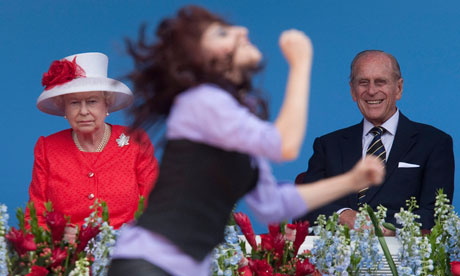
3. The Queen and Prince Philip are in Canada and they're being really boring so no one cares.

4. Will and Kate's nonexistent wedding is still being planned by the media. The two of them went in to buy a frozen pizza a few days ago and Kate had to pay with a credit card because neither one of them carry cash. The whole thing ended up in The Daily Fail; poor dears, they have no privacy.

5. The press says Charles and Camilla are "living separate lives" but it's not true.

Tuesday, June 29, 2010

Wallis, Part 6


So, we're back with part six of the scandalous life of Wallis Warfield Windsor. You cans see the other parts in the blog under May.

While they were on their honeymoon in June 1937, David and Wallis, now Duke and Duchess of Windsor, were faced with deciding what to do with the rest of their lives. They believed they would be invited back to England to do royal stuff within a few years, but what to do until then?

Their friend Charles Bedaux suggested arranging a pseudo-royal tour of housing developments. In Nazi Germany. Now, with hindsight, it's apparent how stupid going on that trip was. But at the time, to David and Wallis, who perhaps weren't the brightest bulbs on the Christmas tree, it sounded like a good idea. It would be something to do, and a way for Wallis to get some level of recognition as a royal wife, which wasn't going to happen in Britain. On the internet, the going theory is that they took this trip because they were just so in love with Nazi stuff they had to see it for themselves. But there are some problems with that theory. First of all, the trip wasn't their idea. It was suggested to them by others and they went along with it. Second of all, they had also considered going on a trip to Soviet Russia, which was probably an even stupider idea considering what usually happened to royalty in Soviet Russia. But after the negative attention they got because of the Nazi Germany tour, the idea was scrapped.

Also, I really don't think they had Nazi sympathies and have yet to see and solid proof to the contrary. In all of the letters they wrote to each other there are very few mentions of Nazis at all, and what there is pretty negative. When it comes to the various second and third hand accounts, usually dating from years after the fact, it's really up to individuals rather or not they believe them. It is worth noting that there are similar second and third hand accounts of Nazi sympathies involving other members of the British royal family, and that includes the present Queen's parents and husband. Of course, there's nothing to most of these allegations, but it's interesting how stuff like this gets much more attention when it involves the black sheep of the royal family. But then again, I wouldn't know, I wasn't there. I'm trying to stick to documented facts when it comes to Nazi stuff. I will say that being raised in a royal family and being brought up to believe in the concept of monarchy might make someone inclined towards fascism or at least less likely to be against it.

Anyways, David and Wallis had decided to go to Nazi Germany to tour housing developments in October 1937. While there, they met with Nazis, toured Nazi buildings, and were generally given a feel for Nazi life. They even got to meet Hitler who told them about how he totally didn't want a war with anyone and was just misunderstood. Wallis found the whole trip kind of boring. She made small talk with some Nazis but none of them seemed to share her interests, which were fashion and campy movies.

After their Nazi visit, they got some angry responses from Britain. Not because they were in Nazi Germany hanging around with Nazis, but because they were taking attention away from the good royals back in Britain. It didn't help that David's fangirls had formed a society in his honor called the Octavians and were planning an annual pilgrimage to his place of birth to celebrate his accomplishments and complain about how The Firm had wronged him. I'm really not making this up. Imagine how poor Bertie must've felt. His only fangirl was his mother. One of the less angry responses was from Winston Churchill, who was one of the only people who knew what was coming when it came to Hitler. Though he had advised against the trip, he said that it had gone pretty well and praised them for not acting quite as stupid as they could've acted.

David and Wallis were once again with nothing to do. Charles Bedaux suggested a trip to America touring his factories, but it didn't happen after pretty much every person who knew David and Wallis told them not to do anything else that idiot suggested. So instead they rented a house on the French Riviera and had some relaxation time. They threw parties, and attended parties, and fell into married life. As to what to do all day, they shopped, played games, and generally had fun. The concept of David getting some kind of job was floated around, but royals really look down on people who work for a living. They regard them much in the same way Middle America regards prostitutes, though they have spent the better part of a century trying to convince people they don't feel that way. Even though personally he wasn't adversed to the concept, David's family and the British government would have seen it as undignified. Plus, they weren't exactly hurting for cash.

Wallis went to a lot of fashion shows, which she enjoyed, and took to circling things she wanted in Vogue magazine for her husband to buy her as gifts. Despite not being exactly happy with how things had turned out, to the point of fighting with David about it quite a bit, Wallis enjoyed the first few years of married life greatly. She was no longer as concerned about David changing his mind about wanting to marry her, though the idea of him regretting abdicating the throne was always on her mind. And for the first time in her life, she didn't have to think about money. David had also turned out to be a more affectionate and respectful husband than either of her other two had been. He put up with her problems, as well as her efforts to fix his own. One of them was that, growing up in a royal family where people nod along to whatever you say, he didn't know how to keep his mouth shut at dinner parties. So Wallis would kick him under the table whenever he said something that people not born with his particular brand of privilege might find offensive. That way he would know to stop talking. If only they could find someone to do that for Prince Philip...

Another problem David faced being in the real world (or the rich White people vacation real world at least) was his complete inability to do basic tasks like packing a suitcase and filing papers. Poor guy didn't even know how a paperclip worked. Of course, his situation was nowhere near as bad as that of some of the surviving Romanovs, who found themselves ex-royals with no money and half their family dead. And they were even more sheltered. Wallis found this more amusing than frustrating and arranged to hire a small army of servants so her poor husband wouldn't be forced to do anything himself. She would still helpfully remind him sometimes: "Remember, darling, you're not King anymore!"

During the early years of their marriage, Wallis figured that since her husband was British she needed a fake British accent to make it official. By all accounts, this accent was incredibly annoying, possibly even more than Madonna's. As a young girl she probably spoke like any other Baltimore girl of her generation, but once she started traveling during her first marriage she played up her "Southern" accent. That lasted until she decided to be British (after she'd been kicked out of Britain) which lasted until she settled on a New England accent modeled after her favorite actress, Katherine Hepburn. Regardless of accent, her voice was alleged to have sounded like "rusty gates", "a bird", or "a cat being strangled to death" depending on who you asked.

Starting in 1939, there was a war going on. I'm not a big World War II person, and that's why I don't watch The History Channel. I don't like wars; they're unpleasant and the only unpleasant historical things I like happened in Tudor England. Plus, unpleasant as it may have been, World War I was more interesting. Anyway, I do have a book on Wallis's life that goes into the war years and all that quite a bit. It's called "The Woman He Loved" by Ralph G. Martin and my copy is currently held together by tape. I really need to take better care of my books.

Long story short, at the outset of the war, David and Wallis came back to England so he could get an assignment to help the war effort. He was given a choice between a job in France or in Wales. He chose Wales, but they sent him to France anyway because the Queen didn't want them in the U.K. at all. A contemporary news article described his visit home:

"Prince Edward, Duke of Windsor, went home, taking with him his still unroyal, still beloved Duchess. Once the news would have been the biggest in all Britain; last week it was just another parenthesis in the sad story of war. The Kelly was scheduled to dock at Portsmouth at 6:30 one evening. At 6:45 the blundering Ministry of Information announced that the Duke had landed. But not until 9, more than two hours after the news hit the wires, did the Duke set foot on the red carpet which covered the very jetty from which he had left England exactly two years, nine months before.
[sic]
Next morning the couple drove (Duchess at the wheel) to Major Metcalfe's grey stone house in Ashdown Forest, about 40 miles south of London. In the car were two paperbound books: Winston Churchill's Step by Step, Dr. Ivan Lajos' Nazis Can't Win. Beaming like newlyweds, they received newspapermen. The Duchess was bright ("looked even better than when she left") in a gold dress, a gold and black checked coat, the Duke proper ("looked several years younger") in gray double-breasted flannels and a maroon-and-white tie."

But then they went back to France, where David was to supervise British troops. There wasn't a lot of fighting going on yet; it was mostly sirens and the occasional bomb getting dropped. Wallis joined the Red Cross and spent her days gathering and packing supplies for soldiers. Once things started picking up and bombings increased, she worked in an ambulance delivering blood. Her servants had to leave to either join the service or be with their families and Wallis considered herself the "busiest" she'd ever been taking care of her household as well as trying to help the war effort. In 1940, the Nazis invaded France and Wallis fled to the South of France while David remained at his post. Though it was later claimed (in several books and on wikipedia) that he deserted his post, he had been given permission to leave and was planning on staying. This changed a few weeks later when Wallis started to get worried and demanded he join her at their house on the French Riviera because she was convinced he would get captured or killed if he remained in Paris.

When Italy declared war on France, the Windsors got papers to go to Italy, while the non-royals were left to suffer. Though they have since been accused of generally being selfish during the war, the worst of their behavior was during the summer of 1940. While they didn't do much that was really "wrong", considering all the horrible things most people in Europe were going through they didn't act very decently.

Wallis and David arrived Madrid after a difficult trip in June. While in Madrid, some Nazis took an interest in them. Basically, Hitler had this crazy idea that if he invaded Britain he might be able to get the Windsors to act as puppet King and Queen. The British government heard about this and decided to try and get the Windsors to come to Britain. They wanted them to come to London, but they still wouldn't receive Wallis or acknowledge her as David's wife. They also wanted them to get on a plane, which Wallis wasn't going to do because she was terrified of flying. Once she became aware of the gravity of the situation, Wallis agreed to go, but David refused because he felt like his wife was being disrespected.

Winston Churchill then called up George VI and Queen Elizabeth and asked them if they would receive Wallis. He explained that he really wanted to get the Windsors out of Spain and that the whole situation would be helped along a great deal if they would pretend they didn't hate Wallis for just a few weeks. They said no. He then told the Windsors that it would be the mature thing to do to come anyway and ignore the slight. They also said no.

While both sides were acting like four-year-olds (except for poor Churchill who had to manage both a war and the inbred clusterfuck known as The Royal House of Windsor), David was approached by a Spanish spy working for the Nazis. He basically explained to him all the "wonderful" things Nazism had to offer. Sort of like a Mormon missionary, except instead of Jesus he was talking about Hitler. David refused, and said that he was a loyal British subject. It's worth noting that the spy in question, when interviewed years later, recounted it happening like that, which goes against the now widespread theory that he was "in on" whatever plans the Nazis had. The Nazis then tried a combination of bribery and blackmail which also didn't work to convince him to do anything.

The Nazis then decided the whole thing would work a lot better if they kidnapped Wallis and David and then tried to brainwash them. To do this they needed to keep them in Spain long enough for their agents to get ahold of them. Which didn't work, because Wallis and David soon left for Lisbon to await further information from Britain. The Nazis then needed to get them back to Spain. They tried to scare them by throwing bricks through their windows and firing gunshots outside where they were staying. They did succeed in scaring them, but instead of going to Spain they finally agreed to go to Britain. Before they could get there, the government gave them an assignment to go to the Bahamas where David would serve as governor. He didn't want to do it, and Wallis really didn't want him to do it, but he wasn't in a position to say no and so Wallis and David found themselves on a ship called "Excalibur" like King Arthur's sword, headed to a smoldering Caribbean island in the middle of July. Wallis cried and complained to one of her friends that she "didn't pack for that".

Wednesday, June 16, 2010

The Tudor Rose

I call myself LadyTudorRose. Do you know about the Tudor Rose? The Tudor Rose was a symbol of the Tudor dynasty founded in 1485. Henry VII, the first Tudor king, was a member of the Lancaster family. He married Elizabeth of York, the daughter of the Yorkist king Edward IV.

During the War of the Roses, the Lancasters, symbolized by the red rose, and the Yorks, symbolized by the white rose, fought for the throne. When Henry Tudor took the throne and married Elizabeth of York, the Tudor Rose was taken to symbolize the Tudor dynasty. It had red and white petals, symbolizing both the York and Lancaster families and the end of the war between them.

You can see the Tudor Rose present in many portraits of members of the dynasty, including Henry VII, Henry VIII, and Elizabeth I, not to mention the many other members of the Tudor family.

Wednesday, June 9, 2010

LadyTudorRose will be out of town!

I am leaving Friday for Washington D.C. and will be spending until late Monday night in the D.C./NoVa/MD area. If anyone has some cool places to recommend, I'm all ears.

This means there will probably not be any posts on Jezebel in the Saturday Night Social an Sunday Night Wrap up threads like I usually do. If I have both time and internet access, I may post one or two pictures and possibly part six of my series on Wallis Windsor which I have been working on. Maybe even part two on Mathilde. But that's a big maybe. As it is I am working on a paper, and generally being boring until then.

I am styling a photoshoot for Virginia Fashion Week on June 19th in Richmond in this wonderful abandoned warehouse space. It's great; true industrial ruins the like of which you can't find in many places. But Richmond is wonderful for stuff like that. I am looking for edgy looking models and some vintage, goth, and steam-punk fashions. We have some make-up artists booked, and four amazing designers have agreed to show clothing. I want it to look like Italian Vogue, but I don't have that kind of budget sadly. Plus, this is the USA so nudity is pretty much out.

Mathilde


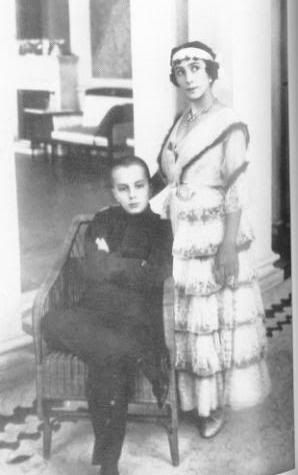
Here we have the scandalous Mathilde Kschessinska, wife of Grand Duke Andrei of Russia, and mistress to two other members of the Romanov family, with her son Vova. Mathilde was born on August 31, 1872 outside of St. Petersburg to a family of performers. Mathilde's parents, grandparents, and siblings were involved in the theater or ballet. From childhood, she was pushed to be a dancer. Petite, with a thin waist, thick legs, and beautiful face, Mathilde was a natural candidate to be a ballerina in Moscow. She first appeared onstage at age nine, and had trained since she could walk. She started the Imperial Ballet School at age eight. This was a major opportunity for a young girl with aspirations to be a ballerina, but it didn't allow her to have much of a childhood. Her parents were stage parents who wanted her to succeed on stage and also pushed her sister, Julia, into becoming a dancer. She was taught by several famous dancers. She was heavily influenced by Danish and Italian dancers who's style was different from what was being done in Russia at the time. They put more weight on acting and showmanship, though Mathilde had excellent form and execution the focus on drama helped her succeed. She was the Lady Gaga of the turn-of-the-century Russian dance world and attracted attention with her flair for drama, extravagant costumes, and outrageous lifestyle. Her formal debut was in 1890, when she was almost eighteen. For the next twenty-seven years she would be the Prima Ballerina of Imperial Russia.

At age eighteen, she met the future Czar Nicholas II. He was impressed by her dancing, and began attending all her performances and sending her gifts back stage. The Romanov men loved dancers. They were considered ideal mistress material and it was not unusual for a popular dancer to have a royal "patron" who gave her jewels and subsidized her lifestyle. In her memoirs Mathilde recalled meeting Nicholas socially the first time and feeling an immediate spark between them. Within a few months there was a sexual relationship going on according to comtemporary speculation. Though we are somewhat unclear on that as Nicholas was a major goody two-shoes an without much proof it could just be they had a "courtly love" thing going on. Nicholas once wrote her that he could barely hold his pen because he was feeling such passion for her. Mathilde began living the lavish lifestyle of a royal mistress. Nicholas rented her a large house and sent her many extravagant jewels, including once necklace with diamonds the size of walnuts that was too heavy for her to wear. Mathilde's career also set off to the point she only danced for special productions, and spent the rest of her time entertaining and being entertained. Her fame and reputation increased. Her father was upset at her for allowing herself to be branded a "scarlet woman", though he had pushed her onto the stage from the time she could walk and knew full well how the royals felt about dancers. And how dancers felt about them, as well. Mathilde and Nicholas's relationship continued until 1894, when Nicholas fell in love with Princess Alexandra of Hesse and broke off his relationship with Mathilde. He visited her backstage after one of her performances, gave her a gift and explained that he had met someone else and would probably be getting married and so needed to break off the relationship. That was actually a very noble thing to do; one of the standard manners of breaking up for royals involves avoiding them, taking up with someone else, and hoping they get the point. The other involves getting a hanger-on or servant to tell them they're no longer welcome at the palace. Mathilde would have been lucky to get a letter.

Nicholas, though entirely faithful to his wife, did occasionally see Mathilde dance and send her gifts (though not romantic jewelry) and they always remained on good terms. Though Alexandra was careful about them not seeing too much of one another; Nicholas had told her of his relationship with Mathilde before they got engaged and begged her forgiveness for him having a past. I told you he was a goody-two shoes with his lady loves, if not where peasants and anti-monarchists were concerned. Meanwhile, she had been introduced to Nicholas's cousin Grand Duke Sergei, who continued to support her. He even bought her a lavish home and even more jewels. Mathilde continued to be a legendary dancer, and she often used her own jewelry with her costumes on stage to give a more dramatic effect. She had the lead role in almost everything she danced in from 1894 on. In 1896 she was named Prima Ballerina of the St. Petersburg Imperial Ballet. She often used her royal connections to advance her career. Though Mathilde liked Sergei and appreciated his support, they did not have the same level of chemistry she had had with Nicholas. Around 1900, she began to fall in love with Grand Duke Andrei, Sergei's cousin, who was seven years her junior. She definitely had a think for royalty. Mathilde was incredibly attracted to Andrei and was charmed by his shyness and awkwardness; he knocked over a wine glass on to her gown one of the first times they dined together. Despite her blooming relationship with Andrei, Sergei continued to support her. And both men gave her lavish gifts. In late 1901 she discovered she was pregnant, and didn't know which one of them was the father.

Her only child, Vladimir, was born June 30, 1902. He was known in the family as Vova, which was a nice nickname for a Romanov. There was one unfortunate Grand Duke who was known as Bimbo. Vova's birth had been very difficult, and Mathilde took a long recovery after his birth. Though her replacement had proved popular and her star was fading a bit, her status as Prima Ballerina remained. When Vova was a child, Nicholas II gave him a title as a favor to Mathilde and he was acknowledged in private as royalty, though no one could agree who his father was. Andrei acted as his father, and legally adopted him after the revolution. Mathilde continued to balance her two royal lovers, and thanks to her great charm and personality, they didn't mind sharing her that much. But Andrei was the love of her life. The home Sergei had bought her became a center of society and her lavish lifestyle was legendary. During a harsh winter when almost no coal could be found to heat anyone's home, Mathilde's house received truckloads of coal every week. She used the finest of everything, and lived a better lifestyle than Nicholas II and his rather sheltered family. Though she was not on the same level as some of the Romanov relatives, who's lavish lives along with Nicholas's isolation, made the public rather miffed with the whole Romanov clan. Not that Mathilde didn't have plenty of enemies. She was not popular with the commoners, who considered her a whore living off royal money and an embodiment of the lust and corruption of the extended Romanov family. She also liked to sabotage young dancers she saw as rivals, though during that time period that was really standard behavior for ballerinas and actresses. Special comment was made about women who weren't divas. Mathilde and Andrei settled into a nice routine of travel and parties, with the occasional ballet and spoiled their son rotten.

But by 1910, things in Russia had begun to change and the future was not looking bright for Mathilde Kschessinska. This will be at least a two part post.